

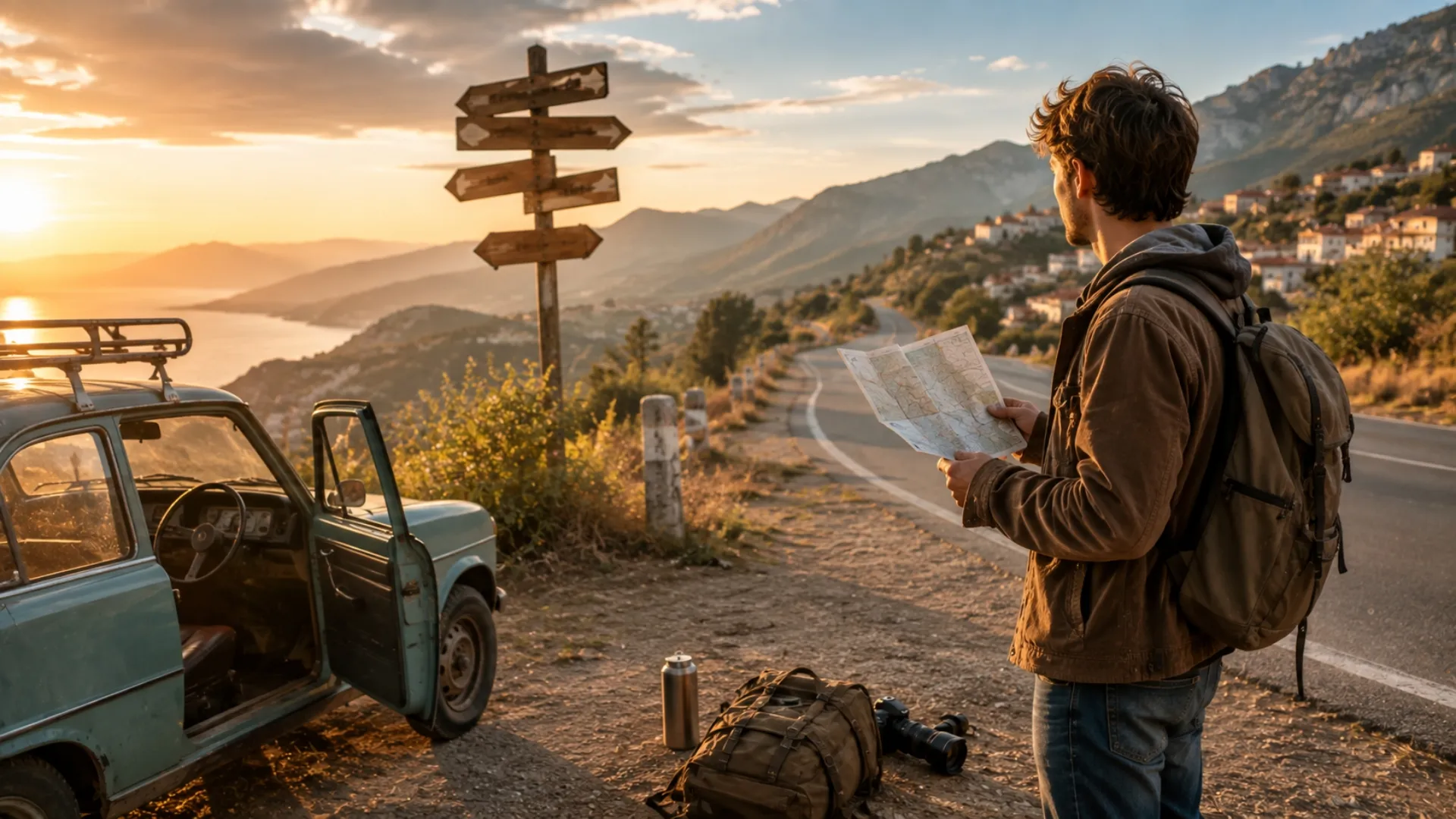
I’ve missed trains, overpacked bags, underestimated travel time, trusted bad directions, and planned trips so tightly that I barely had time to enjoy them.
I’ve also arrived at beautiful destinations without knowing where to go, carried camera equipment I never used, and spent too much time worrying about what I was supposed to see instead of paying attention to where I actually was.
Travel has a funny way of teaching you.
Some lessons come from spectacular moments. Others come from standing on the wrong platform with a heavy backpack while watching your train disappear.
Over the years, I’ve made plenty of mistakes. The good news is that most of them were avoidable.
Here are some of the biggest travel mistakes to avoid if you want your trips to be easier, more enjoyable, and a little less stressful.
1. Trying to See Everything
This was probably my biggest mistake.
When visiting somewhere new, I used to build itineraries that looked impressive on paper.
Three cities.
Six attractions.
Multiple restaurants.
A day trip.
A photography location for sunrise.
Another one for sunset.
It sounded exciting.
In reality, I spent too much time moving from one place to another.
Eventually, I learned that seeing fewer places can actually make a trip feel bigger.
Give yourself time to walk without a destination.
Sit somewhere.
Return to a location.
Explore a neighborhood.
You don’t have to collect destinations like stamps.
2. Packing for Every Possible Situation
I used to pack as if I might encounter every type of weather and every possible adventure.
The result was a bag that was far heavier than it needed to be.
The same thing happened with camera equipment.
I wanted every lens, every accessory, and every piece of gear just in case.
Most of it stayed in the bag.
Now I ask a much simpler question:
Will I realistically use this?
If the answer is no, it usually stays at home.
Travel becomes much easier when you can carry everything you need without feeling like you’re transporting your entire house.
3. Underestimating How Long Things Take
Maps can make distances look deceptively simple.
A journey that appears to take two hours might take much longer once you account for traffic, stops, road conditions, parking, border crossings, delays, or simply wanting to stop and photograph something along the way.
I’ve learned to leave space in my schedule.
Especially on road trips.
The extra time isn’t wasted.
It gives you freedom to stop when something interesting appears.
4. Booking Every Night in Advance
There was a time when I wanted every accommodation decision made before leaving home.
It felt organized.
But sometimes it removed the flexibility I valued most about traveling.
If I loved a place, I wanted the option to stay longer.
If I didn’t enjoy somewhere, I didn’t want to feel trapped by a reservation.
Of course, popular destinations and peak travel seasons require more planning.
But where flexibility is possible, leaving some room in the itinerary can make a huge difference.
5. Ignoring Local Advice
Guidebooks and travel websites are useful.
But they can’t tell you everything.
Some of the best recommendations I’ve received have come from people who actually live in the destination.
A café owner.
A hotel receptionist.
A taxi driver.
Another traveler.
A photographer I met on the road.
Instead of asking only for the “best tourist attraction,” I like asking where someone would take a friend visiting for the first time.
The answers can be surprisingly good.
6. Chasing the Perfect Photograph
As a travel photographer, I’ve made this mistake more times than I’d like to admit.
You see a photograph online.
You find the exact location.
You arrive expecting the same result.
Then reality happens.
The weather is different.
The light isn’t right.
There are too many people.
The scene doesn’t feel the way it looked in the photograph.
I’ve learned to stop chasing someone else’s image.
The goal isn’t to recreate what another photographer saw.
It’s to discover what I can see.
7. Forgetting to Put the Camera Away
The opposite mistake is equally important.
Sometimes I become so focused on documenting a place that I forget to experience it.
Not every sunset needs to become a photograph.
Not every meal needs to be documented.
Not every street needs to be captured.
Sometimes the best thing you can do is put the camera down and simply watch.
The memory doesn’t become less valuable because you didn’t photograph it.
8. Choosing Convenience Over Experience
There are times when convenience is exactly what you need.
But always choosing the fastest option can remove some of the best parts of travel.
The direct train.
The fastest road.
The taxi instead of walking.
The chain restaurant instead of the local café.
Sometimes the slower option gives you more.
I’ve taken roads that added hours to a journey and ended up remembering the road more than the destination.
That’s something I never would have learned from an itinerary.
9. Forgetting to Leave Empty Space
A completely packed schedule leaves no room for accidents.
And some of the best travel experiences are accidents.
A wrong turn.
An unexpected conversation.
A market you didn’t know existed.
A quiet viewpoint.
A local restaurant that wasn’t in your plans.
I now try to leave empty space in every trip.
Not because I have nothing to do.
Because I want to have the freedom to discover something I couldn’t have planned.
10. Thinking Every Trip Has to Be Extraordinary
Travel doesn’t always have to involve climbing a mountain, crossing a desert, or visiting somewhere spectacular.
Some of my favorite memories are remarkably ordinary.
A morning coffee.
A long walk.
A conversation.
A quiet road.
Sitting outside while the weather changes.
Watching people go about their daily lives.
Those moments might never make a travel brochure.
But they stay with you.
What These Mistakes Taught Me
The biggest lesson I’ve learned from all these mistakes is that travel isn’t about creating the perfect itinerary.
It’s about being prepared enough to handle the unexpected.
Plan the important things.
Know where you’re going.
Pack what you need.
Understand your budget.
But leave some room for curiosity.
Because the moments you remember most may not be the ones you planned six months in advance.
They might be the ones that happened because your plan went wrong.
I’ve learned to see travel mistakes differently now.
A missed turn can become a new road.
A disappointing photograph can teach you to look differently.
An empty afternoon can become an unexpected adventure.
And a destination you almost skipped can become the place you remember most.
Travel will never go exactly according to plan. That’s not a problem. That’s often where the story begins.