

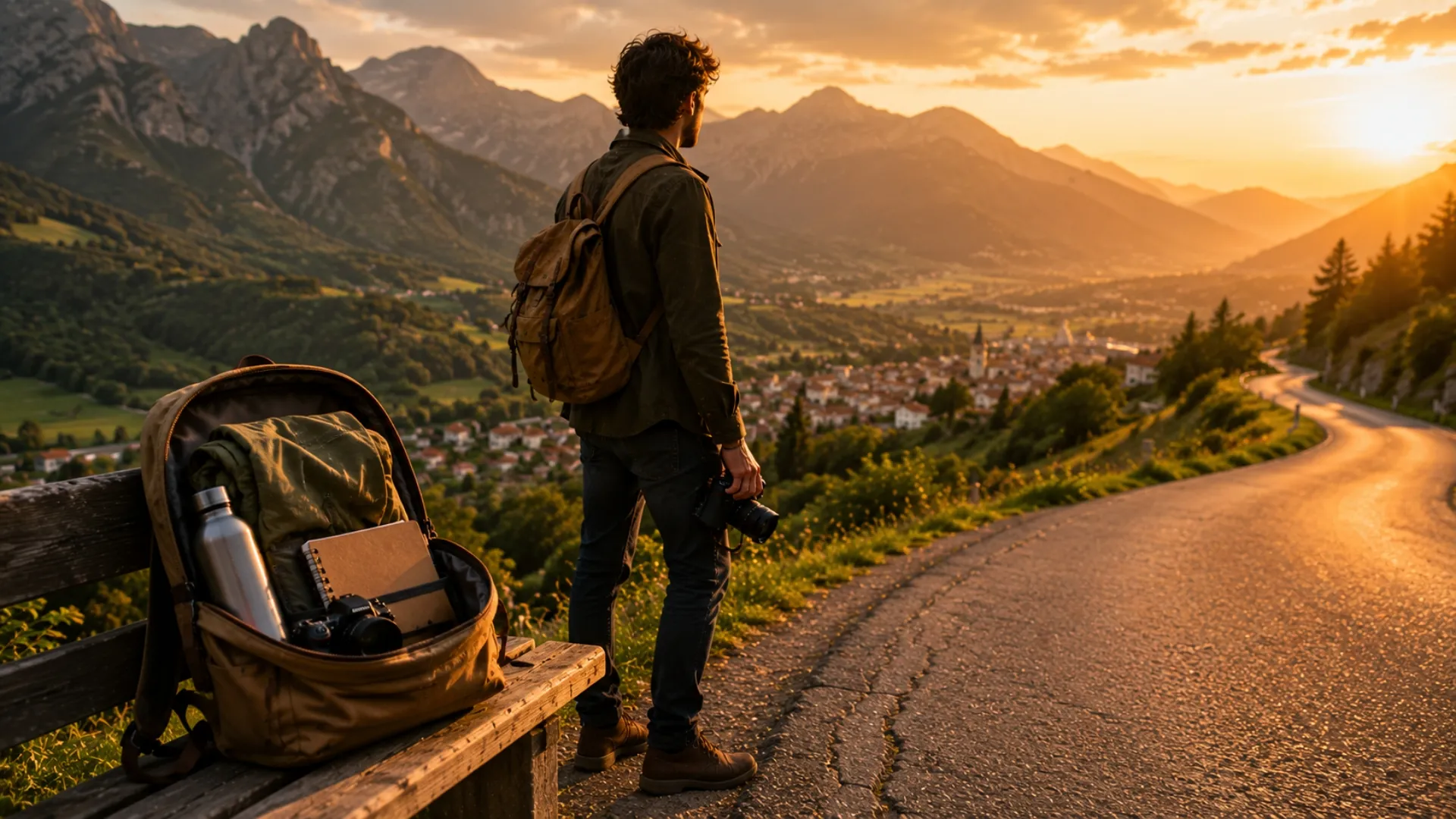
There was a time when I packed for a trip as if I were preparing for every possible disaster.
Different shoes for different situations.
Clothes for weather I probably wouldn’t encounter.
Camera equipment for photographs I probably wouldn’t take.
And enough “just in case” items to make my bag feel like it belonged to someone moving rather than someone traveling.
Eventually, I got tired of carrying all of it.
More importantly, I realized something:
The more I carried, the less free I felt.
Over the years, I’ve learned how to travel with less without feeling like I’ve sacrificed everything I need. The secret isn’t packing as little as possible.
It’s packing with intention.
Start by Asking What You Actually Use
The easiest way to pack less is to look at what you took on your last trip.
What did you actually use?
What stayed at the bottom of your bag?
What did you bring because you thought you might need it?
This simple exercise can be surprisingly revealing.
I’ve discovered that there are always things I pack repeatedly without ever using.
Once you identify those items, leave them behind on the next trip.
You probably won’t miss them.
Choose Versatile Clothing
I don’t want to spend half my trip deciding what to wear.
That’s why I prefer clothing that works in multiple situations.
A comfortable pair of trousers can work for walking during the day and dinner in the evening.
A lightweight jacket can handle changing weather.
Neutral colors make it easier to combine different pieces.
The goal isn’t to have an outfit for every photograph.
It’s to have clothes that are comfortable, practical, and easy to combine.
Pack for the Actual Weather
This sounds obvious, but it’s easy to overpack because you’re worried about what might happen.
Check the expected conditions before leaving.
If rain is likely, pack for rain.
If it’s going to be warm, don’t bring five heavy layers “just in case.”
Of course, weather can change, particularly in mountain and remote areas.
That’s where a few versatile layers become more useful than an enormous wardrobe.
A lightweight layer that can be added or removed is often more practical than carrying separate clothes for every temperature.
Your Shoes Matter More Than You Think
Shoes are one of the hardest things to pack because they take up so much space.
I try to choose footwear based on what I’ll actually be doing.
If most of the trip involves walking, comfortable walking shoes become the priority.
If I’m hiking, I need appropriate footwear for the terrain.
If I’m traveling somewhere where one pair can handle most situations, I won’t automatically bring another pair.
The fewer shoes you carry, the more space you have for things that matter.
Don’t Let Camera Gear Take Over the Bag
This is where I had the hardest time learning to travel light.
As a travel photographer, it’s tempting to bring everything.
Every lens.
Every battery.
Every filter.
Every accessory.
A tripod.
Another tripod.
Something else that might somehow become useful.
But carrying equipment doesn’t guarantee that you’ll use it.
Now I think about the photographs I actually expect to make.
If I’m photographing landscapes, I might prioritize the equipment that helps with that.
If I’m exploring a city on foot, I may want a lighter setup.
If I’m traveling for several weeks, weight becomes even more important.
The best camera setup is often the one you’re comfortable carrying all day.
Don’t Pack for Your Fantasy Trip
This is one of my favorite packing rules.
Pack for the trip you’re actually taking.
Not the trip you imagine taking.
If your itinerary is mostly city walking, don’t pack equipment for a week-long expedition.
If you’re taking a relaxed road trip, don’t bring clothing for every possible formal occasion.
If you’re traveling for work and leisure, separate your actual requirements from the things you simply think you might want.
The fantasy version of a trip can require an enormous suitcase.
The real version often doesn’t.
Buy Small Essentials When Necessary
Some travelers try to carry every possible item from home.
I don’t.
If I’m traveling somewhere where basic products are readily available, I don’t need to bring a huge supply.
Toiletries, snacks, simple supplies, and other everyday items can often be purchased along the way.
This also gives you more flexibility.
You don’t need to predict everything before leaving.
Sometimes the destination can provide what you need.
Use a Small Bag for Day Exploring
Even if you travel with a larger main bag, having a small day bag can make exploring much easier.
I want something that can carry the essentials without becoming a burden.
Camera.
Water.
Phone.
Wallet.
Light layer.
Maybe a notebook.
That’s usually enough.
The less I carry during a day of exploring, the more willing I am to walk farther.
And walking farther is often how I find the best places.
Pack for Movement
This is especially important for road trips, train travel, and multi-destination journeys.
If you’re constantly unpacking and repacking, a complicated system becomes exhausting.
Keep things simple.
Know where your essentials are.
Use small organizers if they genuinely help.
Don’t create a system so complicated that packing becomes another task you have to manage.
Travel should feel lighter, not more organized for the sake of being organized.
Leave Some Space
One mistake I still try to avoid is filling every available centimeter of my bag.
Leave room.
You’ll probably buy something.
Maybe a book.
A local product.
A piece of clothing.
Something from a market.
Or maybe you’ll simply appreciate having space.
A bag that’s completely full when you leave has nowhere to go but heavier.
Learn to Live With a Little Uncertainty
Packing less requires accepting that you won’t be prepared for absolutely everything.
That’s okay.
Travel is full of uncertainty.
You may encounter unexpected weather.
You may change your plans.
You may decide to stay somewhere longer.
You may discover an activity you hadn’t planned for.
You don’t need to carry an answer to every possible situation.
You need enough to handle the likely ones.
Everything else can be solved along the way.
Traveling Light Gives You More Freedom
The real benefit of packing less isn’t the lighter suitcase.
It’s what the lighter suitcase allows you to do.
You can walk farther.
Change trains more easily.
Move between hotels without feeling exhausted.
Take a spontaneous detour.
Get into a small car.
Carry your belongings without constantly thinking about them.
There’s something liberating about realizing you don’t need very much.
I’ve noticed that the less I carry, the more attention I give to the destination itself.
I’m not thinking about my bag.
I’m thinking about the road ahead.
You Don’t Need to Become a Minimalist
I’m not suggesting that everyone should travel with one small backpack.
That’s not realistic for every trip.
Some journeys require specialized equipment.
Some destinations require different clothing.
Some travelers have specific needs.
The goal isn’t to compete over how little you can pack.
It’s to remove the things you don’t need.
Pack what supports the experience you’re actually going to have.
Leave behind what only creates weight.
The Best Packing List Is the One You Don’t Notice
After enough travel, I’ve realized that good packing should become almost invisible.
You have what you need.
Nothing feels excessive.
Your bag is manageable.
You can move easily.
And when you arrive somewhere new, your attention immediately shifts from your luggage to the destination.
That’s the point.
Travel isn’t about how much you can carry around the world.
It’s about what you can experience once you get there.
Pack less. Walk farther. Stay curious. The lighter your load, the more room you leave for the journey itself.