

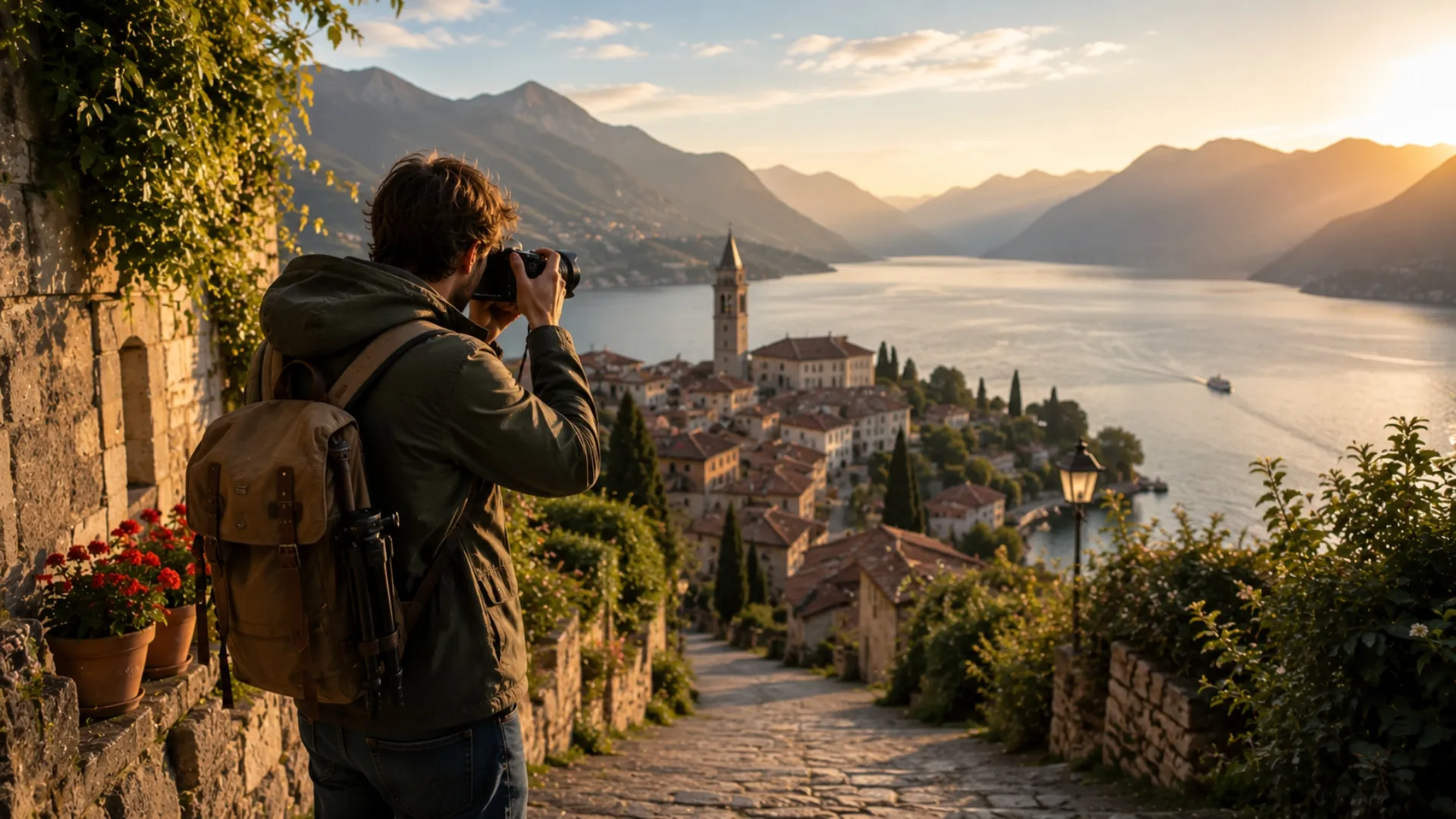
The best photograph I’ve taken in a destination wasn’t always made at the place everyone told me to visit.
Sometimes it was a side street.
Sometimes it was a viewpoint I noticed while driving.
Sometimes it was a completely ordinary scene where the light suddenly changed everything.
That’s one of the things I love most about travel photography. The best photography locations aren’t always the most famous ones.
A landmark can give you a beautiful photograph, but finding your own perspective can create a photograph that actually feels like yours.
Over the years, I’ve developed a simple approach to finding great photography locations wherever I travel.
Start With the Obvious Places
This might sound like bad advice after saying that the best photographs aren’t always famous.
But I still research the obvious places.
Popular landmarks, viewpoints, historic streets, monuments, markets, and landscapes can give you a useful introduction to a destination.
The key is not to stop there.
Use the famous locations as a starting point.
Once you’ve photographed them, start asking:
What is around here?
Often, the interesting part is only a few streets away.
Study a Map Before You Arrive
Maps have become one of my favorite photography tools.
Before visiting somewhere new, I look for things that might create interesting photographs:
- viewpoints
- rivers and lakes
- old neighborhoods
- mountain roads
- walking trails
- markets
- bridges
- historic districts
- unusual architecture
- beaches and coastlines
I don’t create a rigid list of every location.
I’m simply trying to understand the geography.
Knowing where the sun rises, where the major streets run, and where interesting landscapes are located gives me a foundation for exploring.
Walk Without a Fixed Destination
Once I arrive, I walk.
Not every walk needs a photographic objective.
In fact, some of my best discoveries happen when I’m not specifically looking for a photograph.
I’ll notice an interesting doorway.
A narrow street.
A reflection in a shop window.
A building with unusual textures.
A person moving through beautiful light.
The important thing is to stay observant.
Photography begins with seeing.
The camera comes second.
Pay Attention to Light
A mediocre location can become extraordinary with good light.
And a spectacular location can look surprisingly flat in the wrong conditions.
I pay close attention to how sunlight moves through a place.
Morning light can make a city feel quiet and atmospheric.
Late afternoon can create long shadows.
Cloudy weather can bring out subtle colors and textures.
Rain can turn ordinary streets into reflective surfaces.
Night can completely change the personality of a city.
That’s why I don’t judge a location after seeing it once.
Sometimes you simply haven’t seen it in the right light yet.
Ask People Who Live There
Local knowledge can save hours of searching.
When I’m somewhere new, I often ask people simple questions.
Where do you go for sunrise?
What’s your favorite viewpoint?
Which neighborhood should I walk through?
Where would you take a visiting friend?
These conversations can lead to places that don’t appear on the standard tourist map.
And even when the recommendation isn’t perfect for photography, it can lead to another discovery.
Look for Everyday Life
One of the biggest mistakes travel photographers can make is photographing only landmarks.
A destination isn’t just its monuments.
It’s the people buying groceries.
The café opening in the morning.
A bicycle leaning against an old wall.
A fisherman returning to shore.
A market vendor preparing food.
A train arriving at a station.
These details tell the story of a place.
When I photograph a destination, I want the final collection to feel like a memory of being there—not simply a collection of famous buildings.
Search for High and Low Perspectives
Changing your perspective can transform a familiar scene.
Look up.
Look down.
Move closer.
Step farther away.
Get low.
Find a higher viewpoint.
Photographers often become so focused on the subject that they forget to change their position.
Sometimes moving just a few feet completely changes the composition.
Visit the Same Place More Than Once
If I find a location I really like, I don’t necessarily photograph it once and move on.
I might return later.
The weather may have changed.
The light may be different.
People may be moving differently through the scene.
The atmosphere can completely change.
This is another reason I prefer slow travel.
When you’re rushing between destinations, you rarely get a second chance.
When you stay longer, you can wait for the photograph instead of forcing it.
Don’t Depend Entirely on Social Media
Social media is useful for discovering photography locations.
But it can also create a trap.
If you search for “best photography spots” and visit only the locations appearing in every photograph, you may end up making the same image everyone else has made.
I use online photographs as research rather than instructions.
They help me understand what is possible.
Then I try to find my own angle.
Sometimes that means photographing the famous viewpoint.
Sometimes it means turning around and photographing what’s behind me.
Let the Weather Change Your Plans
I used to get frustrated when weather ruined a photography plan.
Now I see weather as part of the photograph.
Fog can simplify a landscape.
Rain can add reflections.
Clouds can create dramatic skies.
Snow can completely transform familiar architecture.
Even harsh sunlight can work if you use strong shadows creatively.
Don’t always wait for perfect weather.
Learn to photograph the conditions you’ve been given.
The Best Photography Location Is the One You Notice
There isn’t a universal formula for finding great photography locations.
The best place depends on your interests, your timing, the light, the weather, and the story you’re trying to tell.
Research helps.
Maps help.
Local recommendations help.
But curiosity matters most.
Walk farther than the crowd.
Take the side street.
Return when the light changes.
Look at ordinary life.
And don’t be afraid to photograph something simply because it catches your attention.
The world is full of beautiful places.
You don’t need to find the location that nobody has ever photographed.
You just need to find a way of seeing it that feels like your own.
The best photography location may not be marked on a map. Sometimes, you find it simply by paying attention.

