
Learn how to create a realistic travel budget that works in practice, including how to estimate major expenses, set daily spending limits, track costs, and prepare for unexpected travel expenses.
How to Create a Travel Budget You Can Actually Follow
A travel budget can make the difference between an enjoyable vacation and financial stress after you return home. However, creating a budget is not enough. The real challenge is creating one that is realistic and easy to follow throughout your trip.
Learning how to create a travel budget you can actually follow starts with understanding your total costs and setting spending limits that match your travel style.
1. Decide How Much You Can Afford
Start with the total amount you are comfortable spending on your trip. Consider your savings, regular expenses, and other financial commitments.
Avoid creating a travel budget that requires you to spend money you cannot comfortably afford.
2. Choose Your Destination
Your destination has a major influence on your travel costs. Flights, accommodation, food, transportation, and activities can vary significantly between countries and cities.
Research typical costs before finalizing your destination.
3. Calculate Transportation Costs
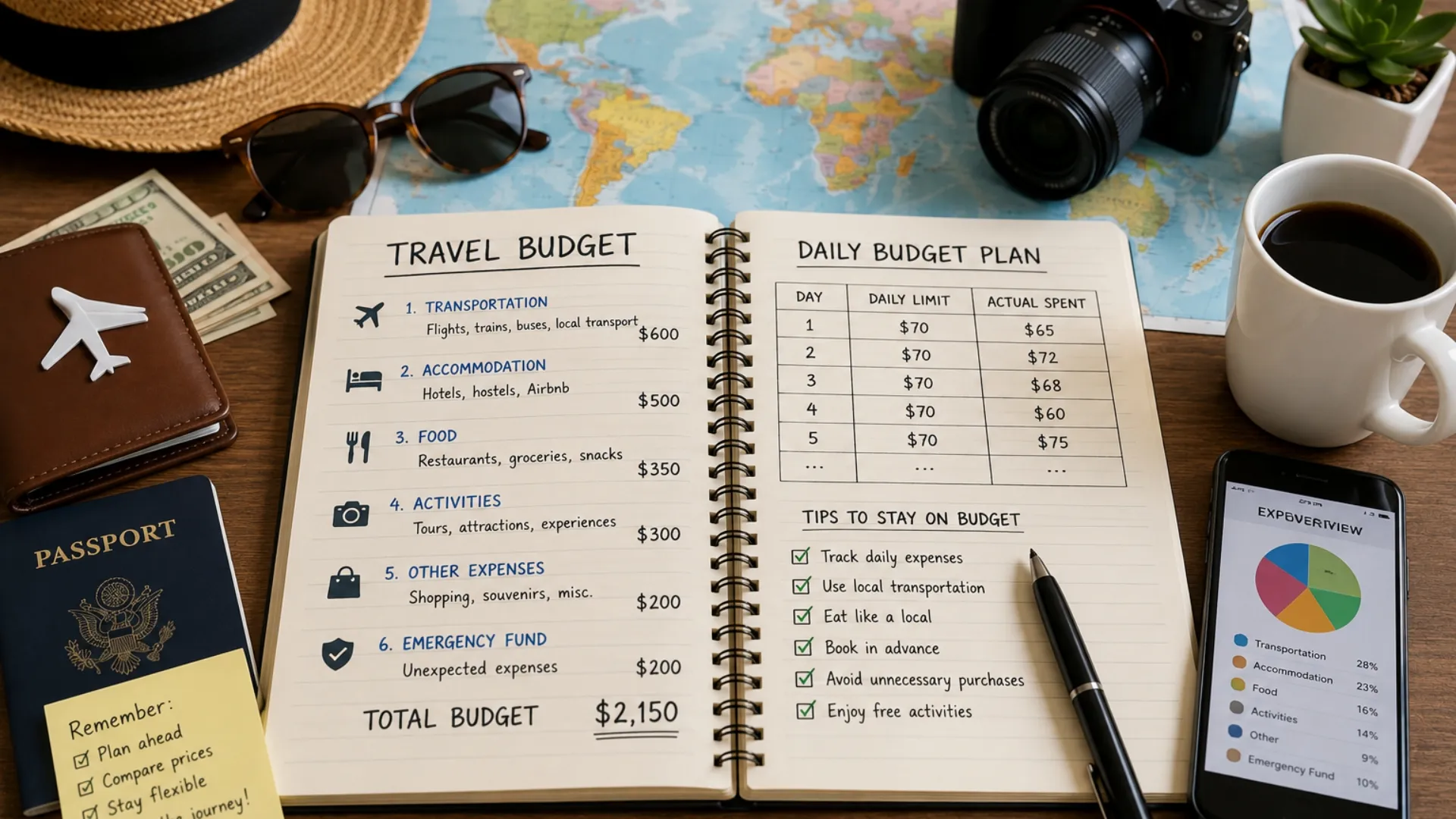
Estimate the cost of getting to your destination first. Include flights, trains, buses, airport transfers, rental cars, and local transportation.
If you’re visiting multiple cities, calculate transportation between each location.
4. Estimate Accommodation
Determine how many nights you need and establish a realistic nightly accommodation budget.
Compare hotels, hostels, guesthouses, apartments, and other options. Remember to include taxes and additional fees when calculating the total.
5. Create a Daily Food Budget
Food expenses can vary depending on your travel style. Decide whether you’ll mainly eat at local restaurants, prepare some meals yourself, or occasionally choose more expensive dining experiences.
Set a daily average rather than trying to predict every meal.
6. Budget for Activities
List the attractions and activities you definitely want to experience. Research their approximate costs and add them to your budget.
Also include some free activities so you can enjoy the destination without constantly spending money.
7. Include Transportation Within the Destination
Local transportation is easy to overlook. Estimate the cost of buses, trains, metro systems, taxis, ride-hailing services, or rental vehicles.
Walking can reduce costs in destinations where attractions are close together.
8. Add Travel Insurance and Other Essentials
Depending on your trip, include travel insurance, visa fees, communication costs, luggage expenses, and other necessary purchases.
These smaller categories can become significant if they are not included from the beginning.
9. Create an Emergency Fund
Unexpected expenses happen. Set aside a separate amount for emergencies, changes to transportation, lost belongings, or other unforeseen costs.
Try not to include this reserve in your everyday spending budget unless necessary.
10. Set a Daily Spending Limit
Once you have calculated your fixed costs, determine how much money remains for daily expenses.
Divide the remaining amount across your travel days and create a reasonable daily target for food, transportation, activities, and shopping.
11. Track Your Spending
Use a notes app, spreadsheet, budgeting app, or simple notebook to record expenses.
You do not need to track every expense obsessively. A quick daily check can help you see whether you’re staying within your plan.
12. Leave Room for Flexibility
A budget that is too strict can make travel stressful. Leave some money for spontaneous experiences, unexpected meals, souvenirs, or changes in plans.
The goal is to control your spending, not eliminate all enjoyment.
Make Your Travel Budget Work
Knowing how to create a travel budget you can actually follow means building a plan around your real travel habits rather than unrealistic spending assumptions.
Calculate major expenses first, establish a daily allowance, track your spending, and maintain an emergency reserve. Most importantly, allow some flexibility.
A good travel budget should give you confidence, not make you feel restricted. With realistic planning, you can enjoy your trip while knowing exactly how much you can comfortably spend.