

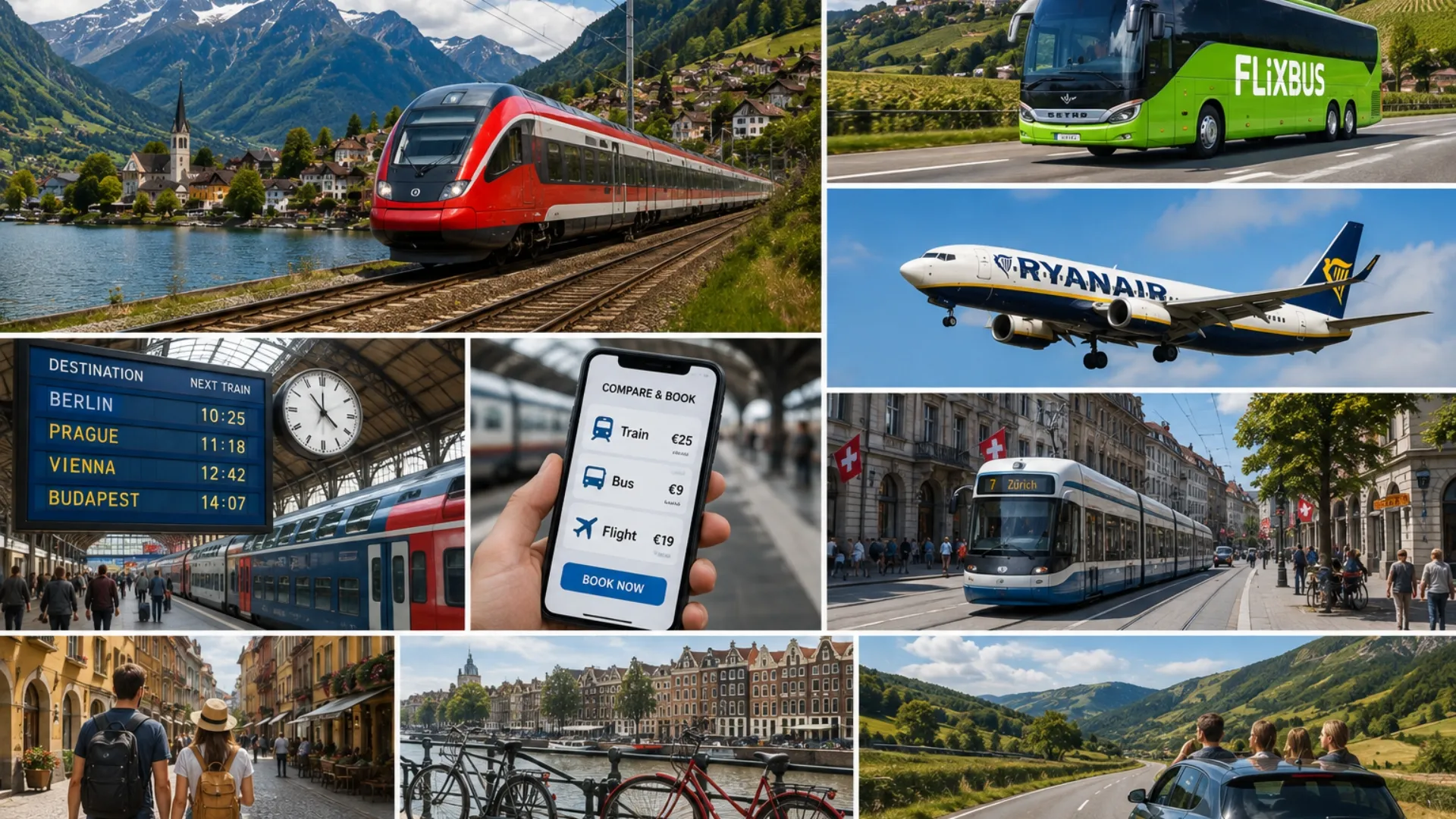
Learn the cheapest ways to travel around Europe, with practical tips for using trains, buses, budget airlines, public transportation, rideshares, and walking to reduce transportation costs.
The Cheapest Ways to Get Around Europe
Europe is one of the easiest regions in the world to explore without spending a fortune on transportation. With extensive rail networks, long-distance buses, budget airlines, local public transportation, and walkable cities, travelers have plenty of options.
Knowing the cheapest ways to get around Europe can help you visit multiple destinations while keeping more of your travel budget available for accommodation, food, and experiences.
1. Travel by Bus
Long-distance buses are often among the most affordable ways to travel between European cities. Major routes connect many countries, and advance booking can sometimes provide particularly competitive fares.
Buses may take longer than trains, but the lower price can make them worthwhile for budget travelers.
2. Use Regional Trains
Trains can be a convenient way to travel between nearby European cities. Regional services are often cheaper than premium high-speed trains.
If you have extra time, compare slower services with faster options before booking.
3. Consider Rail Passes Carefully
Rail passes can be useful for travelers planning multiple train journeys, but they are not automatically the cheapest option.
Compare the cost of individual tickets with the total price of a rail pass before purchasing.
4. Book Train Tickets Early
For popular routes, booking ahead can provide better prices and more schedule choices.
Check whether tickets are flexible or refundable before purchasing, particularly if your plans may change.
5. Use Budget Airlines Strategically
Budget airlines can offer inexpensive flights between European cities, particularly when booked early.
However, carefully check baggage allowances, airport locations, seat fees, and other additional charges. A cheap ticket can become less attractive after extras are added.
6. Travel With Public Transportation
Once you arrive in a city, use buses, trams, metros, and local trains whenever possible.
Many cities offer day passes or multi-day transportation tickets that can provide better value than buying individual tickets.
7. Walk Around City Centers
Walking is completely free and is often the best way to explore historic European cities. Many major attractions, restaurants, markets, and public spaces are located relatively close together.
Walking can also provide opportunities to discover places you might miss while using transportation.
8. Consider Ridesharing
Ridesharing and carpooling services may offer affordable alternatives for certain routes. Availability varies by country, so research reputable options before traveling.
Always consider safety, reliability, and the total travel time.
9. Share a Rental Car
A rental car can become more affordable when several travelers share the cost. It can also provide greater flexibility when visiting rural areas that have limited public transportation.
However, calculate fuel, tolls, parking, insurance, and rental fees before deciding.
10. Travel Slowly
Trying to visit several countries in a short period can increase transportation costs dramatically.
Staying longer in each destination reduces the number of flights, trains, buses, and transfers you need to purchase.
11. Choose Nearby Destinations
Build your itinerary around destinations that are geographically close to one another. This reduces both transportation time and cost.
For example, you could focus on one region instead of crossing the continent repeatedly.
12. Compare the Complete Cost
The cheapest ticket is not always the cheapest journey. Include airport transfers, baggage, station transportation, booking fees, and other additional expenses.
A slightly more expensive train arriving in the city center may sometimes cost less overall than a budget flight arriving at a distant airport.
Travel Europe for Less
The cheapest ways to get around Europe depend on your route, schedule, and travel style. Buses, regional trains, budget airlines, public transportation, walking, and shared transportation can all help reduce costs.
The most important strategy is to compare the complete journey rather than focusing only on the advertised ticket price.
Plan your route logically, book important transportation in advance when appropriate, and avoid unnecessary backtracking. With careful planning, exploring Europe can be both convenient and surprisingly affordable.