
There was a time when I measured a trip by how many places I’d managed to see.
I would arrive with a list of landmarks, viewpoints, museums, restaurants, and famous streets. By the end of the trip, I could tell you exactly where I’d been.
But sometimes I couldn’t remember how any of those places actually felt.
That realization changed the way I travel.
Today, I still visit famous attractions. Some places are famous because they genuinely deserve to be seen. But I’ve started giving more of my time to something else: authentic travel experiences.
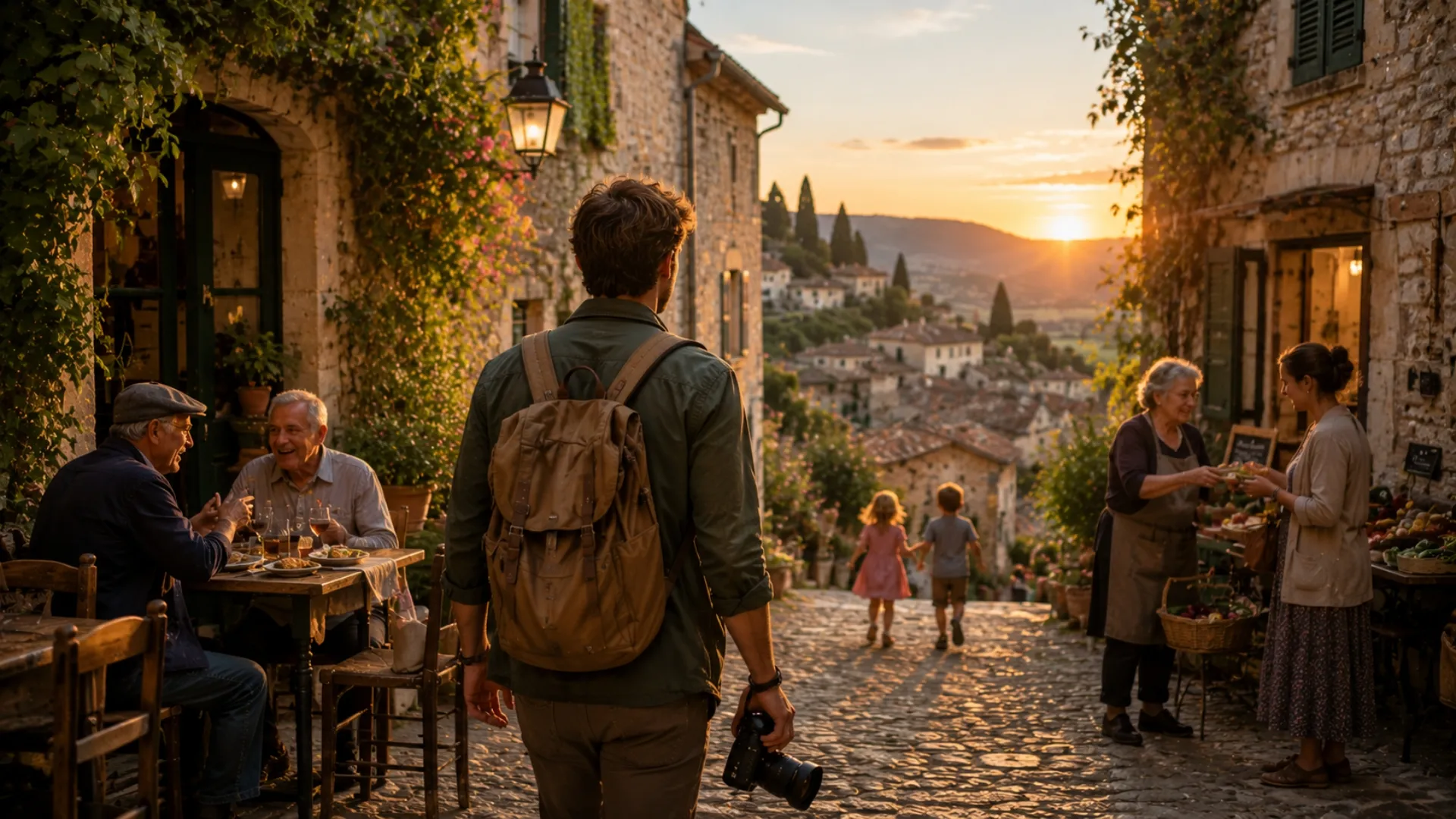
A conversation with a local.
A meal in a small neighborhood restaurant.
A walk with no destination.
A quiet road that wasn’t on my itinerary.
Those are often the moments that stay with me long after the landmark photographs have disappeared into my archive.
The Problem With Checking Places Off a List
There’s nothing inherently wrong with a travel checklist.
When you’re visiting somewhere for the first time, it can help you understand what makes a destination important.
The problem begins when the list becomes the trip.
I’ve had days where I moved from one attraction to another simply because I felt I had to.
Take the photograph.
See the building.
Visit the museum.
Move on.
By the end of the day, I was exhausted.
And strangely, I wasn’t sure I had actually experienced the place.
Travel shouldn’t feel like completing an assignment.
A Destination Is More Than Its Famous Sights
Every destination has a version designed for visitors.
Then there’s the version people actually live in.
The famous square might be beautiful, but what happens two streets away?
The landmark may tell you about history, but what does the local market tell you about everyday life?
The tourist district might have excellent restaurants, but where do residents go when they want a casual meal?
Those questions changed how I explore.
I started looking beyond the obvious.
And that’s when travel became much more interesting.
I Started Walking More
Walking has become one of my favorite ways to understand a destination.
Not walking from attraction A to attraction B.
Just walking.
I’ll choose a general direction and see what happens.
Maybe I’ll find an old building.
Maybe a quiet café.
Maybe a local market.
Maybe nothing particularly spectacular.
And that’s fine.
The point is to observe.
You notice things when you’re walking that you would never see through a car window.
A conversation through an open doorway.
A baker preparing bread.
A child riding a bicycle.
Morning light falling across an old street.
These details create a sense of place.
Food Became Part of the Experience
I also stopped thinking of food as simply something I needed to fit between attractions.
Food is part of travel.
A destination’s food can tell you about its history, geography, traditions, and people.
I enjoy finding small restaurants, local markets, bakeries, cafés, and food stalls.
Sometimes I’ll ask someone where they eat.
The recommendation might be fantastic.
It might also be completely wrong for my taste.
But either way, I’ve learned something.
And sometimes the meal becomes one of the stories I remember most.
The Best Experiences Are Often Unplanned
One of my favorite things about traveling is that plans can go wrong.
A delayed train.
A road closure.
Unexpected weather.
A wrong turn.
At first, these things can be frustrating.
But they can also create opportunities.
You might end up in a town you weren’t planning to visit.
You might discover a restaurant because the place you intended to visit was closed.
You might take a different road and find an incredible landscape.
I’ve learned not to treat every unexpected change as a problem.
Sometimes the detour is the experience.
I Still Visit the Famous Places
Choosing experiences over attractions doesn’t mean ignoring landmarks.
If I’m visiting a destination for the first time and there’s a historic building or landscape I’ve always wanted to see, I’ll go.
But I don’t need every hour of the trip planned around famous locations.
I’ll see the important sights.
Then I’ll slow down.
I’ll explore nearby neighborhoods.
I’ll sit somewhere.
I’ll photograph everyday life.
I’ll ask questions.
I’ll see where curiosity takes me.
That’s the balance that works for me.
Photography Changed the Way I Travel
Being a travel photographer has probably influenced this more than anything.
A famous landmark can make a beautiful photograph.
But sometimes the image that tells the story of a destination is much smaller.
A pair of hands preparing food.
A person walking through morning light.
An old doorway.
A road disappearing into the landscape.
A quiet conversation.
These photographs may not be the images that immediately attract attention.
But they often have more meaning.
They remind me not just where I was, but what it felt like to be there.
Give Yourself Time to Notice
Authentic travel experiences rarely happen when you’re rushing.
You need time to notice them.
That’s why I’ve become such a believer in slow travel.
Stay a little longer.
Walk a little farther.
Talk to someone.
Return to a place.
Leave an afternoon empty.
The more space you create, the more opportunity you have to experience something you couldn’t have planned.
The Memories I Keep Aren’t Always the Famous Ones
When I look back at my travels, I don’t always remember the biggest attractions first.
I remember unexpected moments.
A conversation.
A road.
A meal.
A sunset.
A quiet morning.
A place I found because I took the wrong turn.
Those experiences have become the real souvenirs of travel.
The famous attractions may give you something to photograph.
But the unexpected experiences give you something to remember.
That’s why I no longer want to travel simply to see more.
I want to travel to experience more.
And sometimes that means putting the itinerary away, turning down an unfamiliar street, and seeing where the journey takes me.
The best travel memories aren’t always found at the places you planned to visit. Sometimes they’re waiting somewhere between them.