

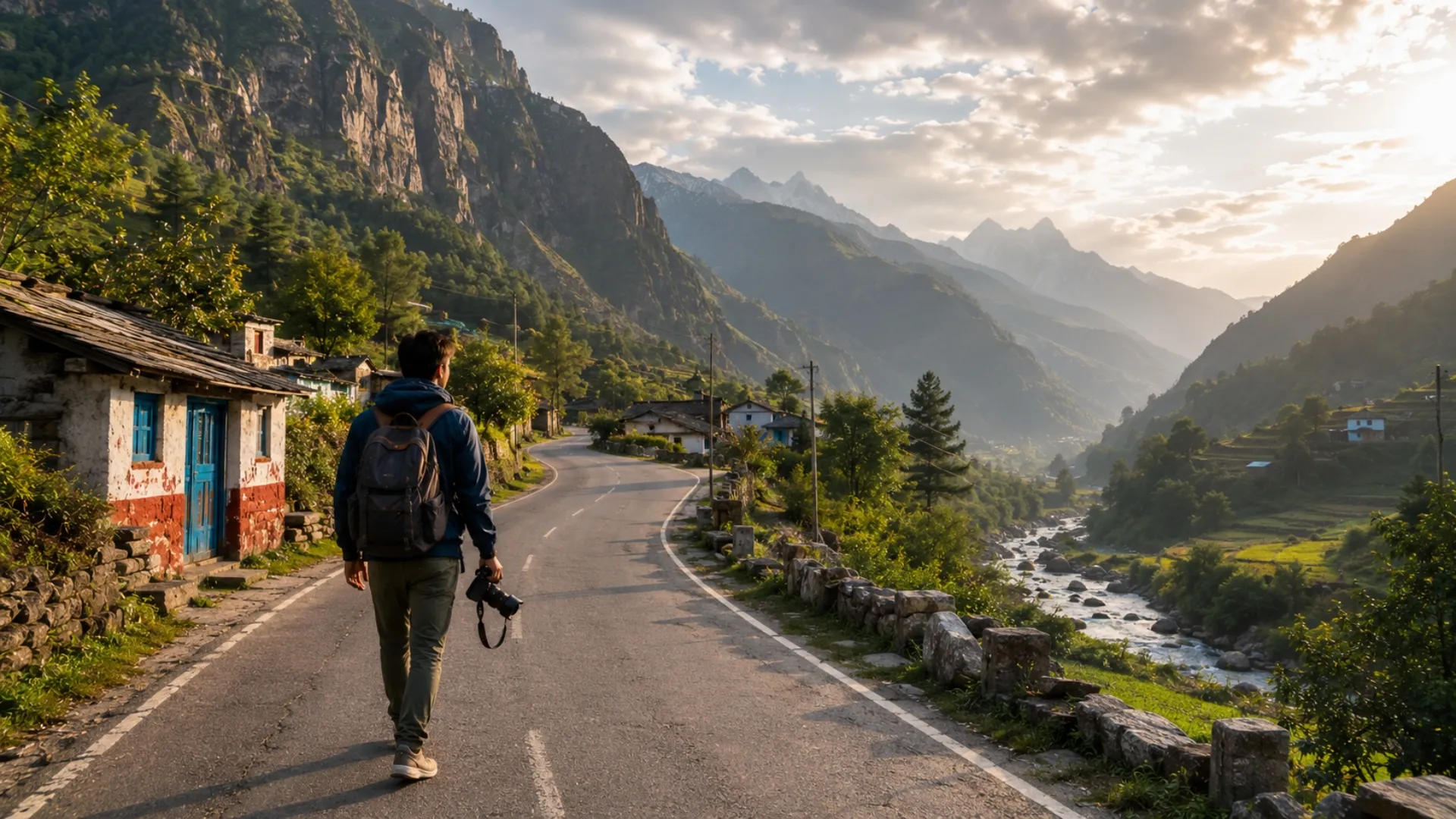
Planning a photography trip can be surprisingly difficult.
You want to know where the best photographs are.
You want to understand the landscape.
You want to be in the right place when the light is perfect.
But if you plan every photograph before you arrive, you can make the trip feel more like a photography assignment than an adventure.
I’ve learned to find a balance.
I research enough to understand a destination, but I leave enough room for the unexpected. Some of my favorite travel photographs have come from places I never planned to photograph.
Here’s how I approach planning a photography trip without taking away the spontaneity that makes travel exciting.
Start With the Story, Not the Shot List
Before I look for specific photography locations, I ask myself a simple question:
What story do I want to tell about this place?
Maybe it’s a mountain landscape.
Maybe it’s a historic city.
Maybe it’s local life, food, architecture, or a road trip through changing landscapes.
Having a general story helps me decide what to photograph without creating a rigid checklist.
I don’t need 50 specific shots.
I need a reason to explore.
Research the Destination Before You Go
I always do some research.
I look at maps, photographs, local attractions, weather patterns, transportation options, and the general geography of the area.
I also look beyond the most famous landmarks.
If everyone photographs one viewpoint, I want to know what else exists nearby.
Research gives me a starting point.
It shouldn’t determine the entire trip.
Find Out When the Light Works Best
Light is one of the most important parts of travel photography.
A location can look completely different depending on the time of day.
Before a trip, I check sunrise and sunset times and think about how the sun will interact with the landscape.
Early morning can offer quiet streets, soft light, and fewer people.
Late afternoon can create warmer tones and longer shadows.
Night can completely transform a city.
I don’t necessarily plan every photograph around golden hour, but I like knowing when the best opportunities are likely to happen.
Choose a Few Priority Locations
I usually create a short list of locations I definitely want to photograph.
Not twenty.
Not fifty.
Just a few.
These might include a particular landscape, historic district, viewpoint, market, or architectural location.
Once those priorities are established, I stop adding things.
That leaves time to discover places naturally.
If I find something better along the way, I can change the plan.
Don’t Pack Every Piece of Camera Gear
Travel photography can tempt you to pack everything.
Multiple lenses.
Several cameras.
Tripods.
Filters.
Batteries.
Memory cards.
Accessories for accessories.
I’ve done it.
And then I’ve carried the bag around all day wondering why I brought so much equipment.
These days, I think carefully about what I actually need.
My camera.
A versatile lens.
Extra batteries.
Memory cards.
A lightweight tripod when necessary.
A simple cleaning kit.
The exact setup depends on the destination, but the principle remains the same:
Take the gear that helps you create, not the gear that makes you worry about carrying it.
Leave Time to Wander
This is probably the most important part of my photography planning.
I leave empty time.
If I’m in a city for four days, I don’t plan four days of photography locations.
I’ll identify a few important places and then leave the rest open.
That’s when I walk.
I might turn down a street because the light looks interesting.
I might see a local market.
I might discover an old building.
I might simply find a scene that feels like the destination.
Those moments can’t be planned.
They have to be discovered.
Return to the Same Location
I also don’t assume that one visit is enough.
A location can look completely different in different conditions.
A street photographed in bright afternoon sunlight may feel ordinary.
Return at sunrise and it might become atmospheric.
Visit during rain and the reflections could completely change the composition.
This is one of the biggest advantages of giving yourself more time.
You don’t have to get the photograph right on the first attempt.
Photograph the Details, Not Just the Landmarks
When I travel, I try to photograph more than the obvious attractions.
I look for details that help tell the story of a place.
An old doorway.
A street sign.
A local market.
Someone preparing food.
A bicycle leaning against a wall.
A window filled with morning light.
These photographs may not become the main image from a trip, but together they create a much richer visual story.
Don’t Let Photography Take Over the Trip
This is something I remind myself regularly.
I’m a photographer, but I’m also a traveler.
Sometimes I put the camera away.
I sit somewhere.
I eat.
I walk.
I watch.
Not every experience needs to become a photograph.
In fact, some of my strongest photographic ideas have appeared after spending time simply experiencing a place without a camera in front of my face.
My Rule: Plan the Framework, Not Every Moment
That’s ultimately how I approach a photography-focused trip.
I research the destination.
I understand the light.
I identify a few priority locations.
I pack practical gear.
Then I leave room for everything I don’t know yet.
Because that’s the part of travel I don’t want to lose.
The unexpected road.
The changing weather.
The stranger who recommends a place.
The street I wasn’t planning to photograph.
The moment when the light suddenly becomes perfect.
A good photography trip needs preparation.
But it also needs curiosity.
Plan enough to know where you’re going. Leave enough freedom to discover somewhere else.


4 Comments
William Clark
Morbi eget ligula gravida, pulvinar magna eget, eleifend. Proin massa tortor, are sit amet commodo et, eleifend vel odio. Integer porta orci ornare metus.
Shery Turner
Proin massa tortor, are sit amet commodo et, eleifend vel odio. Integer porta orci ornare metus. egestas.
Set Mitchell
Lorem ipsum dolor sit amet, consetetur sadipscing elitr.ased diam nonumy eirmod tempor invidunt ut labore et dolore magna aliquyam erat, sed diam
Dorothy Finley
Morbi eget ligula gravida, pulvinar magna eget, eleifend. Proin massa tortor, are sit amet commodo et, eleifend vel odio. Integer porta orci ornare metus.
Comments are Closed.