

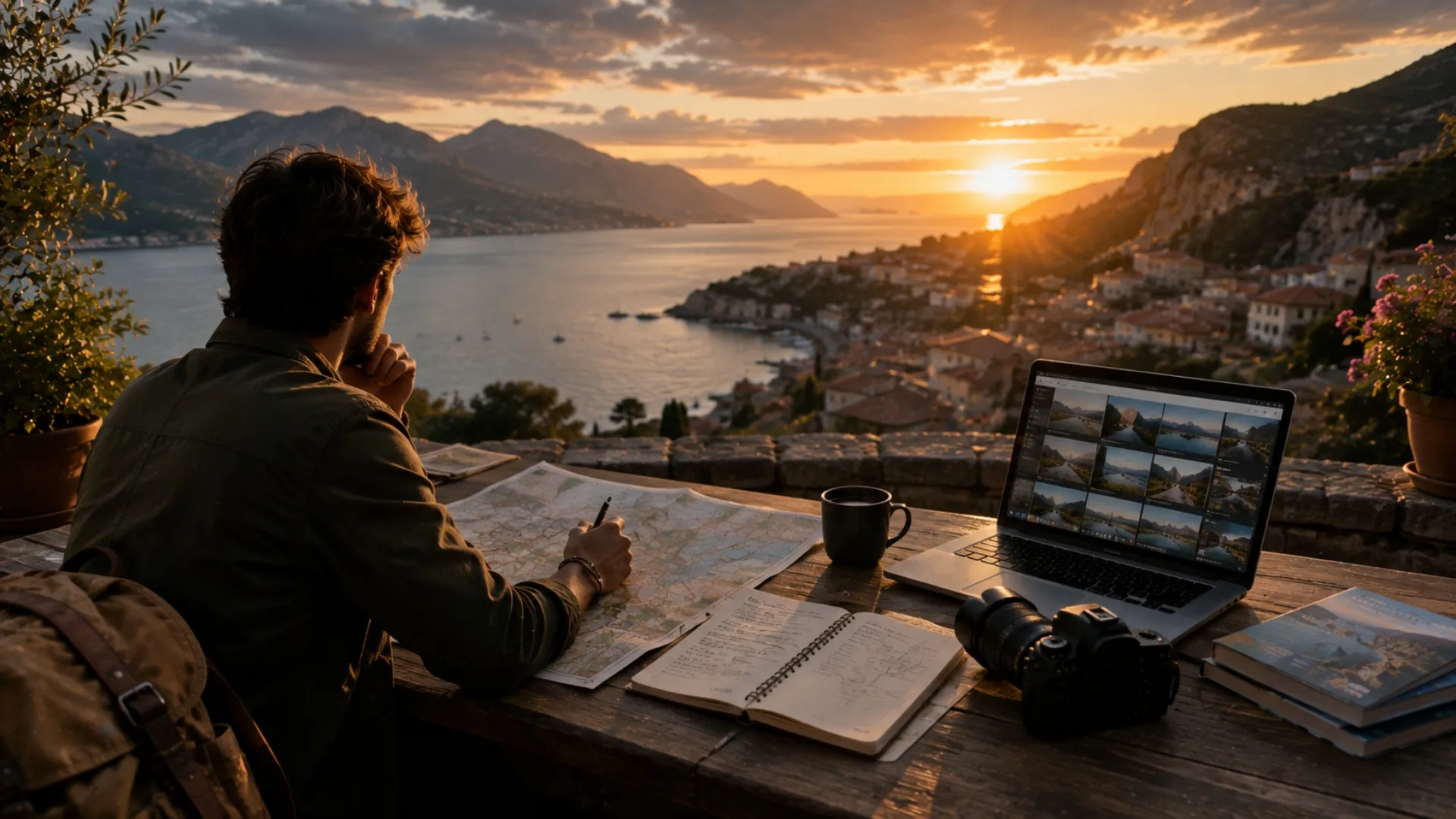
Choosing where to travel next sounds easy until you actually have the whole world in front of you.
Mountains or coastline?
A busy city or a quiet village?
A road trip or a slow stay?
Somewhere I’ve never been, or somewhere I already know I love?
After years of traveling, I’ve stopped choosing destinations simply because they’re popular. I’m more interested in finding a place that fits the kind of experience I’m looking for at that particular moment.
Sometimes I want adventure.
Sometimes I want photographs.
Sometimes I want to disappear into a quiet town for a week.
And sometimes I just want to get on the road and see what happens.
If you’re wondering how to choose a travel destination, here are the things I consider before deciding where I’m going next.
1. I Start With How I Want to Feel
Before looking at flights or accommodation, I think about the experience I want.
Do I want to feel challenged?
Inspired?
Relaxed?
Curious?
Completely disconnected from my normal routine?
This question can narrow down an enormous list of possibilities.
If I want adventure, I might look toward mountains, national parks, remote landscapes, or destinations with opportunities for hiking and road trips.
If I want to slow down, I might choose a smaller town where I can stay for several days without feeling like I need to constantly move.
The destination should match the mood I’m looking for.
2. I Look at the Landscape
Landscape is a major part of my decision because I’m also a travel photographer.
I ask myself what I actually want to photograph.
Mountains?
Desert?
Coastline?
Forests?
Historic architecture?
Busy city streets?
Wildlife?
Sometimes one photograph is enough to make me start researching an entire destination.
But I don’t choose a place purely because it looks good in photographs.
I want to know what it will be like to experience the landscape in person.
3. I Check the Season
Timing can completely change a destination.
A place that looks perfect in summer might feel completely different in winter.
Rainy seasons, extreme temperatures, snow, festivals, autumn colors, migration seasons, and daylight hours can all affect the experience.
Before committing to a destination, I check what the weather is typically like during the period I plan to visit.
I don’t need perfect weather.
In fact, some of my favorite photographs have been made in conditions that initially looked far from ideal.
But I want to know what I’m getting into.
4. I Think About How Much Time I Have
The amount of time available should influence the destination.
If I only have a few days, I don’t want to spend most of them getting there and back.
For a longer trip, I’m much more willing to choose somewhere remote or build a road trip around the destination.
I’ve learned that a destination isn’t necessarily worth visiting simply because it’s famous.
It needs to make sense for the time available.
Sometimes the best trip is somewhere closer that allows you to slow down.
5. I Look Beyond the Famous Attractions
I research the obvious sights, but I don’t stop there.
I want to know what exists beyond the main tourist attractions.
Are there interesting neighborhoods?
Local markets?
Scenic roads?
Walking trails?
Small towns nearby?
Independent cafés?
Historic areas?
Photography opportunities?
These details help me understand whether a destination has enough depth to keep me interested.
A beautiful landmark can fill an afternoon.
A destination with layers can fill a week.
6. I Look for Opportunities to Wander
This is especially important for me.
I want a destination where I can walk without needing every hour planned.
A place with interesting streets, local neighborhoods, trails, markets, or natural areas gives me opportunities to explore.
Sometimes I deliberately choose destinations that reward curiosity.
I don’t want to know exactly what I’ll photograph every day.
I want to discover some of it when I arrive.
7. I Consider the Cost, But Not Just the Price
Budget obviously matters.
But I don’t only look at the price of flights or hotels.
I consider the overall cost of spending time there.
Transportation.
Food.
Accommodation.
Activities.
Car rental if necessary.
Photography opportunities.
And how expensive it will be to move around.
A destination with a cheap flight can become surprisingly expensive once you’re there.
On the other hand, a slightly more expensive journey can sometimes offer better value if I can stay longer and travel more slowly.
8. I Think About the Journey Itself
Sometimes the journey is part of the reason I choose a destination.
A scenic drive.
A train journey through mountains.
A coastal road.
A ferry.
A long-distance route through changing landscapes.
I don’t always want the fastest way to get somewhere.
If the route itself looks interesting, I’ll consider making it part of the adventure.
That’s one reason I love road trips.
The destination is only one chapter.
The road provides the rest.
9. I Look for Something I’ve Never Experienced
I try not to repeat the same kind of trip constantly.
If I’ve recently spent time in cities, perhaps I’ll look for mountains.
If I’ve been photographing landscapes, maybe I’ll focus on local culture.
If I’ve had a packed itinerary, perhaps I’ll choose somewhere that encourages slow travel.
Travel is an opportunity to challenge your usual habits.
You don’t have to go somewhere completely unfamiliar.
But trying something different can make a familiar traveler feel like a beginner again.
And I think that’s a good thing.
10. I Leave Some Room for Instinct
Research can tell you a lot.
Reviews can tell you a lot.
Maps can tell you a lot.
But sometimes you simply feel drawn to somewhere.
Maybe you’ve seen a photograph.
Read a story.
Heard someone describe a road.
Or noticed a place on a map and wondered what it would be like.
I don’t ignore that feeling.
Not every destination needs a complicated justification.
Sometimes curiosity is enough.
The Best Destination Is the One That Fits You
There is no universal answer to the question of where you should travel next.
The best destination depends on your time, budget, interests, energy, and the kind of experience you’re looking for.
That’s why I don’t have a permanent list of “best places to travel.”
A destination that’s perfect for one person might be completely wrong for another.
And the place that’s right for you this year might not be right next year.
So when I’m choosing my next destination, I try to ask fewer questions about what’s trending and more questions about what I actually want.
What do I want to see?
What do I want to learn?
What do I want to photograph?
How do I want to spend my days?
And most importantly:
Where am I curious to go?
That last question has taken me to some remarkable places.
Because sometimes the best travel destination isn’t the one everyone else is talking about.
It’s the one you can’t stop wondering about.