

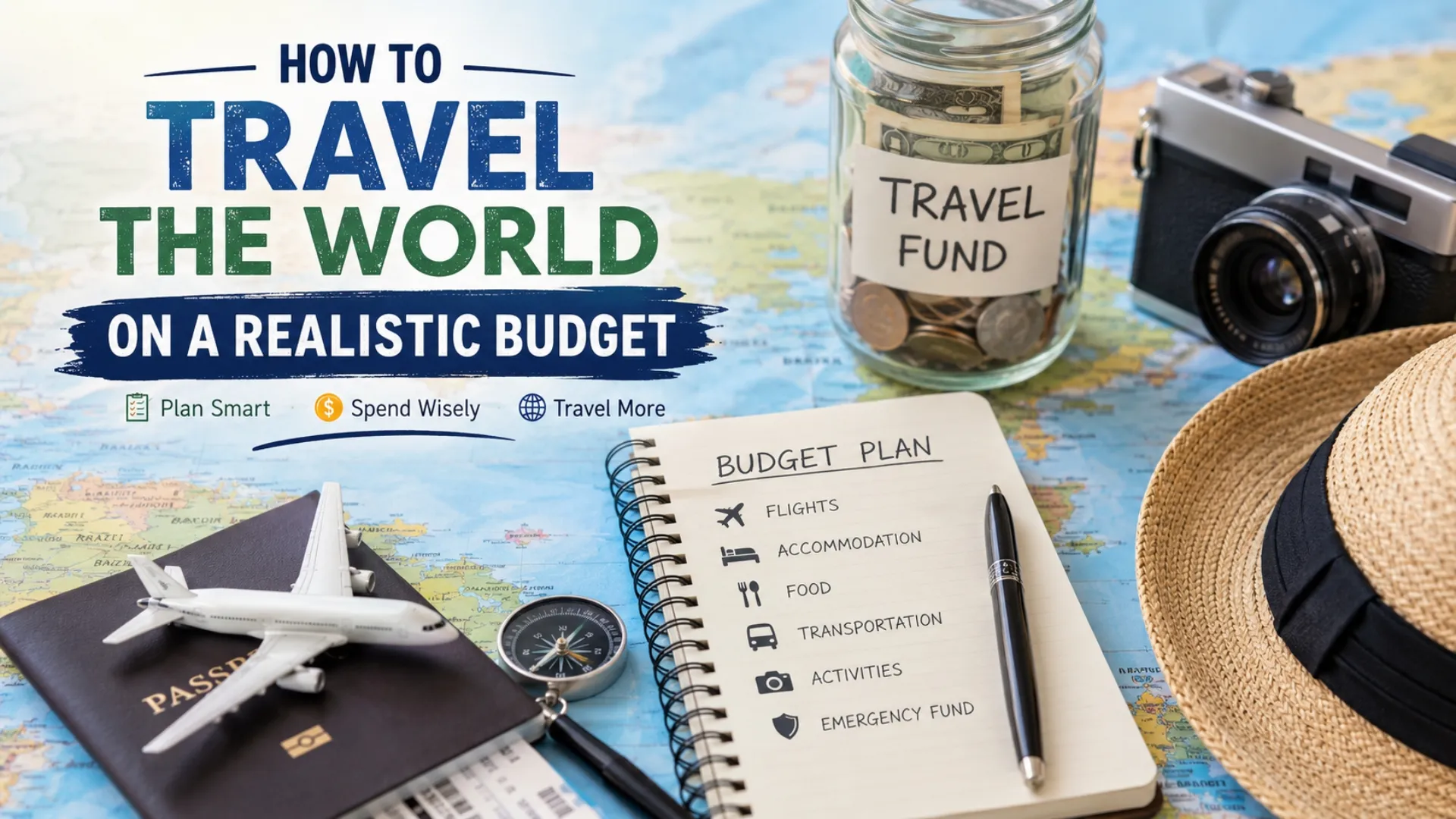
Discover practical ways to travel the world on a realistic budget, including how to reduce flight and accommodation costs, manage daily spending, choose affordable destinations, and plan smarter trips.
How to Travel the World on a Realistic Budget
Traveling the world may sound expensive, but seeing more of the planet does not necessarily require unlimited money. With careful planning, flexible travel choices, and realistic spending limits, you can experience different countries while keeping your finances under control.
Learning how to travel the world on a realistic budget is about making smart decisions rather than sacrificing every comfort.
1. Set a Realistic Travel Budget
Start by determining how much you can comfortably spend. Consider your income, savings, travel duration, and existing financial commitments.
Divide your budget into categories such as transportation, accommodation, food, activities, insurance, visas, and emergency expenses. This gives you a clearer picture of what you can actually afford.
2. Choose Affordable Destinations
Your destination can have a major impact on your overall travel costs. Countries with lower accommodation, food, and transportation costs can allow you to stay longer without dramatically increasing your budget.
Instead of focusing only on famous destinations, consider less expensive alternatives nearby.
3. Be Flexible With Flights
Airfare can represent a significant part of an international travel budget. Compare multiple airlines, travel dates, airports, and routes.
If possible, travel during shoulder seasons or choose less popular departure dates. Flexible planning can sometimes help you find better-value fares.
4. Save on Accommodation
Hotels are not your only option. Depending on your destination and travel style, consider hostels, guesthouses, apartments, homestays, or budget hotels.
Staying slightly outside the main tourist center may also reduce accommodation costs while still providing convenient transportation access.
5. Eat Like a Local
Restaurants in major tourist areas can be expensive. Local markets, neighborhood restaurants, food stalls, and casual eateries can often provide excellent meals at more reasonable prices.
You do not have to avoid restaurants completely. Instead, balance occasional special meals with affordable everyday options.
6. Use Public Transportation
Public transportation is often less expensive than taxis or private transfers. Trains, buses, metro systems, and shared transportation can help reduce daily travel expenses.
Walking is another excellent option when attractions are located close together.
7. Prioritize Experiences
You do not need to pay for every attraction. Many destinations offer free parks, public spaces, walking routes, cultural neighborhoods, markets, and viewpoints.
Choose the paid experiences that matter most to you and build the rest of your itinerary around lower-cost activities.
8. Travel Slowly
Moving between destinations constantly can become expensive. Frequent flights, transfers, and short hotel stays add up quickly.
Spending more time in each destination can reduce transportation costs while allowing you to experience local life more deeply.
9. Track Your Spending
Keep a simple record of your daily expenses. Tracking your spending helps you identify where your money is going and adjust before you exceed your budget.
Small daily savings can make a significant difference during a long trip.
10. Keep an Emergency Fund
Never spend your entire travel budget. Set aside money for unexpected transportation, medical expenses, lost belongings, or changes to your itinerary.
An emergency reserve can provide valuable peace of mind while traveling.
See More of the World for Less
Knowing how to travel the world on a realistic budget is about planning around your priorities. You can save on flights, accommodation, food, and transportation while still enjoying meaningful experiences.
Choose destinations carefully, travel at a comfortable pace, monitor your spending, and leave room for unexpected expenses. With realistic expectations and smart planning, international travel can become a sustainable part of your lifestyle rather than an occasional luxury.